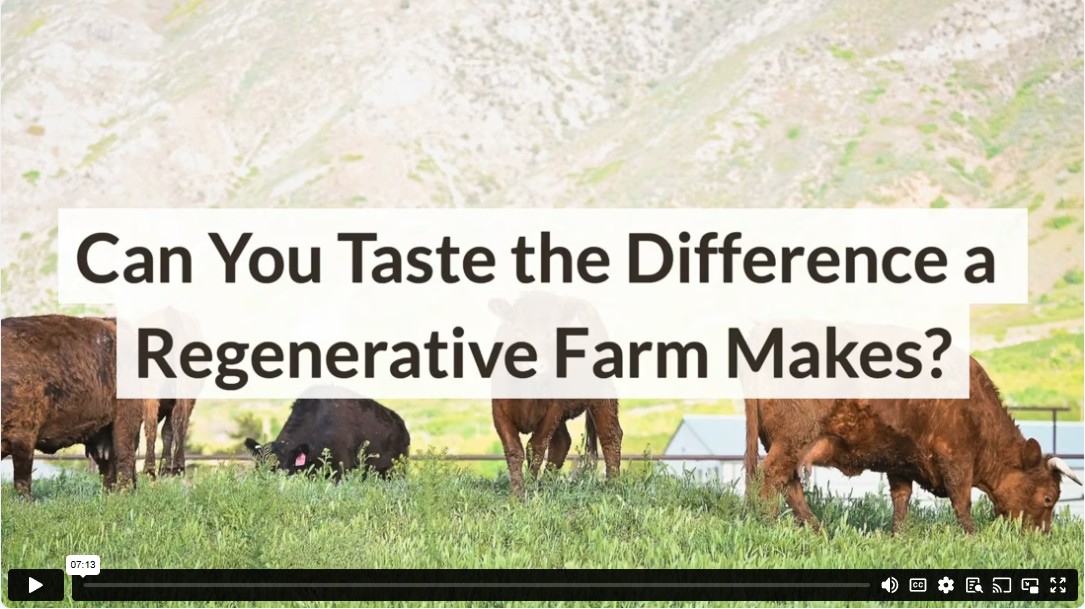
Most beef in the case at the grocery store looks the same. You see the same bright red color, same white trim, same vacuum-sealed packaging, but pull two steaks from different farms, cook them the same way, and the flavor difference can be dramatic.
That gap doesn’t come from luck or seasoning. It comes from the ground up.
Healthy Soil Produces Better Grass
A pasture isn’t just soil, and soil isn’t just dirt. A healthy pasture holds billions of microorganisms, fungi, and organic material working together to cycle nutrients and support plant growth. On a regenerative farm, that biological activity gets protected rather than exploited.
Conventional farming often depends on synthetic fertilizers to compensate for depleted soil. Regenerative farming takes the opposite approach. Farmers rotate cattle across pastures, allowing grazed land to rest and recover. They also naturally work manure back into the soil.
When this happens, roots deepen, and microbial life thrives. The ground builds real fertility over time instead of borrowing it from a bag.
Grass growing in rich, living soil carries more of the minerals and compounds that cattle need to thrive. When cattle eat well, the quality shows up in the meat.
Diverse Pasture Feeds Cattle a Richer Diet
Picture the difference between a vending machine and a farmers’ market. That’s similar to the comparison between a feedlot grain ration and a diverse regenerative pasture.
A cow grazing on a healthy pasture eats a rotating mix of grasses, legumes, herbs, and seasonal plants. That variety translates into complexity in the beef’s flavor. The fat profile, aroma, and underlying taste all reflect what the animal ate throughout its life.
Grass-fed and grass-finished beef develops higher concentrations of omega-3 fatty acids and conjugated linoleic acid compared to conventionally raised beef. These fats don’t just make the meat healthier for you than typical beef. They directly affect the way the meat smells and tastes.
You’ll also notice a difference in the fat color. The yellow tint in grass-fed and finished beef comes from beta-carotene in the forage. That pigment carries flavor compounds and is a visual sign of what the animal actually ate.
Slower Growth Builds Better Flavor
Regenerative farms don’t push cattle to hit harvest weight as fast as possible. They let animals grow at a natural pace, often over a period significantly longer than in conventional operations.
That time isn’t wasted. As cattle mature slowly on varied pasture, intramuscular fat develops in a finer, more distributed way. The fat laces through the muscle rather than pooling in thick seams. That distribution creates a tender, rich flavor that runs through every bite.
This is the logic behind slow food at the farm level. A 30-month animal raised on good pasture has had more time to develop that dimension than a fast-finished animal pushed to market at a fraction of that age. There’s no substitute for time.
Animal Welfare Shapes Meat Quality
The science on this is straightforward. Chronic stress in cattle raises cortisol and other hormones that affect meat chemistry. Animals under constant stress produce beef with higher ultimate pH, which shortens shelf life and affects both tenderness and flavor.
Cattle raised on regenerative farms generally experience fewer stressors than those raised in concentrated feedlot operations. They have room to graze, express their natural behaviors, and live the way their biology intends. That lower-stress life is evident in the muscle tissue.
Better pH balance after harvest means more stable flavor development during aging. It also means a better response to heat when cooked.
Dry Aging Completes What the Farm Starts
The process doesn’t end at harvest. Dry aging is the final step in producing exceptional beef, and it really helps the meat reach its potential.
During dry aging, enzymes that are naturally present in the meat break down muscle fibers, which increases tenderness. Moisture evaporates from the exterior, concentrating flavor in the remaining tissue. The result is beef with a deeper, more delicious taste than fresh-cut meat can offer.
Dry aging works best when the starting material is high-quality. A well-raised, grass-finished animal gives the aging process something to work with. A conventional feedlot animal, even aged for the same period, simply doesn’t carry the same flavor foundation, so most beef producers don’t bother to dry-age. While this saves them time and money, it makes serious sacrifices on flavor and quality.
Whole-steer dry aging extends the benefits of dry aging to every cut, not just premium steaks. Even the ground beef carries the character of the aging process and provides a flavor you can’t find anywhere else.
Terroir Isn’t Just for Wine
Wine drinkers are familiar with terroir, which is the idea that the land itself leaves a distinct imprint on the final product. The mineral content of the soil, the local climate, and the specific mix of plants growing in a given place shape the drink’s flavor.
The same principle applies to beef. Cattle raised in the high desert along a river valley in New Mexico eat different forage than cattle in the Pacific Northwest or the Midwest. Many elements, from the local grasses to the soil’s mineral composition, work their way into the animal and eventually into the beef.
When you buy from a single-farm regenerative operation, you’re tasting something specific. Not a blend of cattle from dozens of operations across multiple states. Not a commodity product standardized for dull consistency across a national supply chain.
Regenerative farming helps protect that specificity.
Labels Don’t Always Tell the Full Story
Not every label that sounds good means the same thing. “Natural” has almost no regulatory definition when it comes to beef. “Grass-fed” without “grass-finished” can still describe an animal that spent its final months in a feedlot.
Here’s what actually signals regenerative, high-quality farming practices:
- Grass-fed and grass-finished together, not just one without the other
- Pasture-raised with meaningful outdoor access, not just a technical minimum
- Single-farm sourcing, so the beef traces to one operation rather than a processing blend
What About Formal Certification?
You may have heard of formal farm certification and wonder if that should be part of your vetting process. However, smaller farms don’t always carry third-party certifications because applying can be very costly and time-consuming.
Regenerative farmers are almost always willing to explain their practices and are proud of the work they do. Don’t disqualify a farm just because it doesn’t have certification, but do make sure they are willing to disclose their processes step by step.
Better Beef Starts from the Ground Up
The flavor in a great steak doesn’t begin at the butcher block or the grill. It starts in the soil, moves through the roots and into the grass, is transferred to the animal over months and years of careful husbandry, and finally reaches your plate.
Regenerative farming is a decision to take that process seriously every step of the way. Better soil, better grass, slower growth, lower stress, thoughtful finishing, and proper aging are not individual tricks. They work together to create a superior product that conventional beef simply can’t match.
Video