
Dry Aged Beef
Dry-Aged Grass-Fed Beef
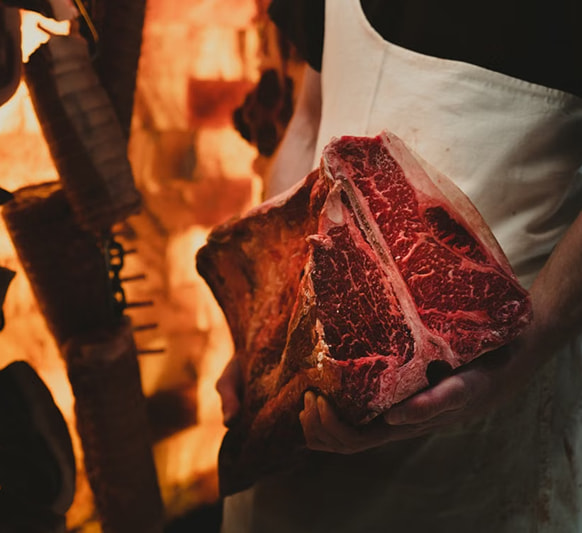
When you search online for dry-aged beef for sale, you might be surprised and even overwhelmed by all the different options available. Some online butchers sell grain-finished USDA Prime beef aged by third-party facilities, while farm-direct operations sell beef they raised and had aged at a local processor. Steakhouses often resell pre-aged loins from distributors.
The dry-aged label only indicates how the beef was processed. It doesn’t tell you anything about the animal’s breed or how it was raised, fed, or finished. The quality of the beef before it was aged makes a big difference and shouldn’t be overlooked.
Dry aging doesn’t create flavor; it concentrates the flavor that’s already there. Grain-finished commercial beef can develop a rich, heavily marbled taste. Grass-fed, grass-finished heritage Dexter beef develops a savory, pasture-raised flavor grown over 2 years on regenerative land.
Because the starting point is different, the final flavor after dry-aging is different as well. Buying grass-fed, dry-aged Dexter beef online is a great option for both flavor and quality.
How Dry-Aging Works
Dry-aging is a process in which beef is held in a controlled, refrigerated environment for several weeks. During that time, moisture slowly evaporates from the surface, naturally concentrating the beef’s flavor.
At the same time, natural enzymes in the muscle begin breaking down the connective tissues that hold the muscle fibers together. This process is what gives dry-aged beef a tenderness that fresh beef struggles to match.
Dry-aging isn’t just about letting beef sit in a cooler. Temperature, airflow, and humidity must be carefully managed to promote aging while preventing spoilage. The beef also needs enough time to become tender and intensify the flavor.
What’s Available Through the Dry-Aged Program
Every cut in the butchery comes from the same heritage Dexter cattle, the same regenerative pastures, and goes through the same minimum 14-day whole-steer aging program.
Dry-aged steak for sale online includes:
- Bone-in ribeye in 14 oz, 20 oz, and 22 oz
- New York strip
- Top sirloin
- Filet mignon
- T-bone
Braising and slow-cooking cuts include:
- Brisket
- Short ribs
- Chuck roast
- Osso buco
80/20 ground beef is available from whole steer dry-aged trim.
What’s Available Through the Dry-Aged Program
Every cut in the butchery comes from the same heritage Dexter cattle, the same regenerative pastures, and goes through the same minimum 14-day whole-steer aging program.
Dry-aged steak for sale online includes:
- Bone-in ribeye in 14 oz, 20 oz, and 22 oz
- New York strip
- Top sirloin
- Filet mignon
- T-bone
Braising and slow-cooking cuts include:
- Brisket
- Short ribs
- Chuck roast
- Osso buco
80/20 ground beef is available from whole steer dry-aged trim.
Why Our Grass-Fed Dry-Aged Dexter Beef Tastes
Different From Steakhouse Dry-Aged Beef
Most dry-aged beef for sale at premium steakhouses and high-end online butcheries is grain-finished. Grain feeding speeds up fat development, resulting in heavy intramuscular marbling and a thick outer fat cap, both of which are associated with USDA Prime beef. When that beef is dry-aged, the aging process concentrates the flavor that grain finishing built: rich, buttery, and fat-forward.
The grass-fed and finished beef from our Dexter cattle is different. Their genetics and 30 months of slow maturation on natural pasture mean the fat is distributed throughout the muscle as spider marbling.
That fat can carry the robust flavor more evenly throughout the muscle. It’s more deeply beefy, savory, and concentrated. When grass-fed Dexter beef is dry-aged, the aging concentrates what the pasture and the breed already created.
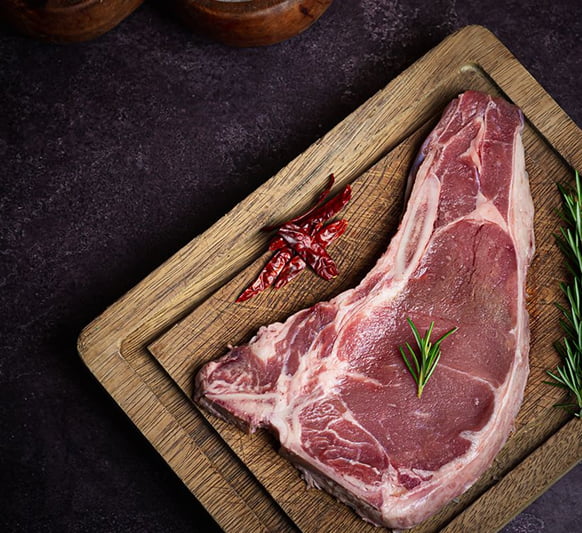
Why We Choose Whole-Steer Dry-Aging
Most dry-aging programs only dry-age select, premium cuts. Pieces like the ribeye, strip, and filet receive the full treatment. Often, the rest of the cuts, like the chuck, brisket, short ribs, ossobuco, and the ground beef, are processed and sold fresh.
This approach devotes the most time and attention to the most expensive cuts while leaving much of the animal’s potential on the table.
On the other hand, whole-steer dry-aging means every part of the animal undergoes the same aging period before being cut. The braising portions, roasts, and trim used for ground beef all receive the same minimum 14-day aging treatment as the premium steaks.
This can give you a big boost in flavor. A chuck roast or short ribs from a dry-aged whole steer has already developed concentrated flavor before it ever reaches a braise. Ground beef made from whole-steer dry-aged trim carries the same savory depth that the aging produces in the steaks and tastes noticeably different from any 80/20 ground beef you’ll find at a grocery store.
Whole-steer dry-aging is one of the biggest factors that sets Mahanaim Farms apart, and it’s why every cut, not just the most expensive ones, is intensely flavorful and tender.
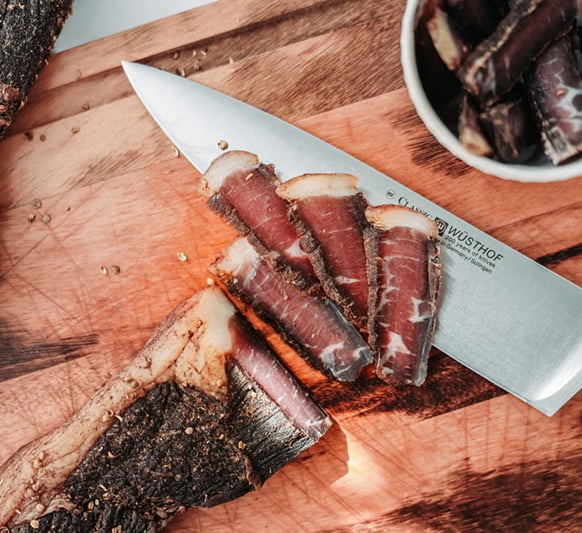
Who Buys Our Dry-Aged Grass-Fed Beef
Dry-aged grass-fed beef from a heritage breed attracts a specific buyer. Often it’s the home cooks who’ve been disappointed with conventional options and are looking for the delicious flavor that comes from intentionally raised, aged, and sourced beef.
It’s also a great option for those who follow carnivore, ancestral, keto, or whole-food diets, or anyone looking for all-natural dry-aged prime beef from a single source.
If you’ve been googling, “where to buy dry-aged steak near me,” you’re in luck. For buyers in the Salt Lake City area, ordering online and picking up locally means the beef is as fresh and traceable as direct-from-farm purchasing gets.
If you aren’t in the area, we can ship directly to your door, no subscription required. Individual cuts, braising selections, and ground beef can all be ordered in whatever combination and quantity you need.
How Mahanaim Farms Produces Its Dry-Aged Beef
Mahanaim Farms is a single-farm operation along the Rio Grande River in central New Mexico. We breed, raise, and finish every animal on the same property. Our heritage Dexter cattle reach maturity at around 30 months on regenerative pastures managed without synthetic fertilizers, herbicides, or pesticides.
After processing at a USDA facility, the entire animal is dry-aged for at least 14 days before being cut. We don’t select only premium cuts for aging. Everything from filet mignon to ground beef gets the same premium treatment.
Order Dry-Aged Grass-Fed Beef From Mahanaim Farms
You can buy our dry-aged beef online or order for pickup in Salt Lake City. There’s no subscription or minimum bundle requirement. You can choose the cuts you want, in the quantities that make sense, and receive them when it fits your schedule.
Browse the full range of dry-aged steaks for sale, as well as braising cuts and ground beef, all from our farm butchery. Every cut comes from cattle we raise and dry-age ourselves, and you can learn about the breed, the farming practices, and the aging process before you buy.
If you’ve been wondering where to buy dry-aged beef and steak, visit our online store. It’s easy to order directly from the farm and have premium dry-aged beef ready for pickup or delivery.
FAQs
How long does dry-aged beef take to produce?
The aging period begins after the animal is processed and enters the controlled environment. Typically, at least 14 days are needed to achieve significant improvements in flavor and tenderness.
Of course, dry-aging is only the final step. In a single-farm, whole-steer program, the much longer investment period begins before the beef ever enters the aging room.
Our heritage Dexter cattle take around 30 months on regenerative pasture to reach full maturity before processing. That means that every dry-aged cut represents more than two and a half years of careful raising, followed by the aging process itself, which is one reason this beef is priced differently from factory-farmed beef.
Is dry-aged beef safe to eat?
Dry-aged beef produced under controlled conditions is safe to eat. Dry aging is done in a carefully managed environment to prevent the growth of harmful bacteria.
- Temperatures are kept between 32 and 38 degrees Fahrenheit
- Airflow is managed across the surface of the beef
- Humidity is controlled
The outer surface of the beef develops a hardened crust during aging, and some surface mold growth is normal. Professional dry-aging programs trim this exterior layer off completely before the beef is cut into retail portions.
The portion you receive has had all of the aged exterior removed and is clean and ready to cook. All beef produced at Mahanaim Farms is processed at a USDA-inspected facility and held to the same food safety standards as any commercially sold beef.
Is it normal for dry-aged beef to smell different than fresh-cut beef?
Dry-aged beef has a distinctly different smell from fresh-cut beef, and first-time buyers are often surprised by it. The aging process produces aromatic compounds that give dry-aged beef an earthy, nutty character. Some people describe the smell as similar to blue cheese in its complexity, concentrated and rich rather than fresh and mild.
This aroma is completely normal and is produced by the same flavor compounds that make the dry-aged beef steak taste more complex and deeply savory when cooked.
If the meat is spoiled, it smells very different from both dry-aged and fresh-cut beef. Spoiled beef smells acrid, sour, or ammonia-like.
If you unpack a dry-aged steak and notice the characteristic aging aroma, let it rest uncovered on the counter for 20 to 30 minutes before cooking and observe how the smell opens up. What starts as a distinct smell settles into a beefy, concentrated aroma. Just like the smell is noticeably different, the flavor is too.
Why does dry-aged beef look darker and drier than grocery store beef?
Two distinct factors cause dry-aged, grass-fed Dexter beef to look different from conventional grocery-store beef.
The first is the dry-aging process itself. Moisture evaporates from the surface of the beef during aging, and even after the outer crust is trimmed before cutting, the remaining interior surface is visibly less moist than that of a vacuum-sealed fresh-cut steak.
The second is the grass-finished heritage breed. Cattle that graze on diverse pastures throughout their lives develop higher myoglobin content in their muscle tissue, which produces a naturally deeper red color in the finished beef.
Both these effects are normal. The drier surface is a benefit when cooking because it sears faster and forms a better crust in a hot pan than a wet surface. The deeper color reflects the breed and the diet, not a quality issue or aging problem.
Can I dry-age beef at home?
Finding dry-aged steak near you can seem impossible, and some may think home dry-aging is the answer. While it’s technically possible, it can be incredibly difficult to do safely without dedicated equipment. The conditions that make commercial dry-aging both safe and effective are specific. Standard home refrigerators typically can’t meet these conditions.
Home dry-aging in a regular refrigerator often leads to off-flavors from cross-contamination or uneven drying due to inconsistent conditions. This process also requires working with large sub-primal cuts rather than individual steaks. The outer crust that forms during aging must be trimmed away, and on a single steak, there isn’t enough meat remaining after trimming to make it worthwhile.
For buyers interested in dry-aged beef, purchasing from a producer with a professionally managed program yields better, more consistent results than most home setups can.
How does the length of the aging period affect the flavor?
Generally, the longer the meat is dry-aged, the more intense the flavor gets.
In the first two weeks of aging, the beef starts to tenderize and concentrate flavor. Even after 14 days, the differences are significant. By 30 to 40 days, most dry-aged beef has developed a noticeably more complex, concentrated, and deeply savory profile.
Beyond 40 to 45 days, buyer opinions start to mix. The flavor continues to intensify, shifting toward a stronger taste that some enjoy while others find it too aggressive. At 60 to 90 days and beyond, that intense flavor becomes the dominant note of the steak rather than a background complexity, and is often compared to blue cheese.
This progression is why different producers target different aging durations based on what their buyers want. A minimum of 14 days yields genuine, meaningful improvement in both texture and flavor. What comes after that is a matter of personal preference.
Does dry-aging work the same way on lean grass-fed beef as on heavily marbled grain-finished beef?
Fat plays a central role in how dry-aging affects the finished steak. The flavor that concentrates during the aging process is mostly found in fat tissue. On very lean beef with little fat, the aging process produces less dramatic flavor even as the meat becomes more tender.
On well-marbled beef, there’s more fat to carry those concentrated flavors, and the effect is stronger. It’s one reason most commercial dry-aging programs focus on grain-finished, heavily marbled beef.
Grass-fed Dexter beef is unique. While a grass-finished Dexter steak has less total fat than a heavily grain-marbled commercial steak, it has spider marbling distributed throughout the muscle tissue rather than concentrated in a surface cap. That distributed fat carries the breed’s deeply savory flavor throughout the steak.
The flavor concentrates throughout the cut and produces dry-aged prime beef that’s intensely beefy and savory throughout, rather than rich at the perimeter and leaner at the center.
How does dry-aging affect ground beef?
Dry-aged ground beef is only possible when the whole steer is dry-aged instead of just the premium cuts.
Many producers only age the steak cuts and process the rest of the animal fresh. This means the trim that becomes ground beef is fresh-cut muscle that hasn’t had the benefit of dry aging.
When the whole steer goes through the aging program before cutting, the trim that becomes ground beef goes through the same flavor concentration and tenderization as the steaks. The ground beef made from that trim carries the concentrated, savory character that the aging built into the muscle tissue before the grind.
The result is noticeable in simple preparations where the ground beef is the primary ingredient. A burger made from whole-steer dry-aged trim has a more intensely beefy, complex flavor than a burger made from fresh-cut trim of the same breed and raising standard. The only difference is the depth of flavor.
Does dry-aged braising beef cook differently?
Braising cuts from a whole steer dry-aging program enter the pot with more developed flavor than the same cuts processed fresh.
A fresh-cut brisket or chuck roast develops its full flavor depth through the long braise, as collagen breaks down and juices redistribute over hours at low heat. A dry-aged braising cut starts that process ahead of the game, with a more concentrated flavor base already established in the muscle tissue.
The flavorful dry-aged taste carries through into the braising liquid. The finished meat is often more savory and complex than the same cut would be without dry-aging. The beef is also more tender, but it’s less noticeable than in steaks, since the long, low heat of braising tenderizes on its own regardless of whether the cut was aged.
Buyers who braise regularly often look for dry-aged cuts to slow-cook, even though manufacturers often overlook them in favor of the more expensive steaks.
How should I store and handle dry-aged beef ordered online?
If you haven’t had luck finding local suppliers when googling “dry-aged beef near me,” it might be time to find a good online supplier.
Our dry-aged beef available online is vacuum-sealed immediately after trimming. The packaging stops the aging process. Refrigerate the packaged beef if you plan to use it within a few days. Freeze if you want to store longer.
Dry-aged beef freezes well because its moisture content is already lower than that of fresh-cut beef. There’s less water to form large ice crystals that can damage the meat. A vacuum-sealed, dry-aged steak that’s promptly frozen and slowly thawed in the refrigerator can reliably retain its quality.
When you’re ready to cook, move the steak from the freezer to the refrigerator 24 hours earlier, then let it rest at room temperature for 30 minutes before it hits the pan. Pat the surface dry before seasoning rather than rinsing it.
Does dry-aged beef cook faster than fresh beef, and does it require any different techniques?
Dry-aged beef can cook slightly faster than fresh-cut beef because the aging process has already reduced the moisture that slows heat transfer during cooking. With less water in the tissue, heat moves toward the center more quickly than in a fresh-cut steak of the same thickness. The longer the beef is aged, the more apparent this effect is.
A meat thermometer is the most reliable way to manage the difference. Pull the steak at your target internal temperature rather than relying on timing.
The surface of a dry-aged steak is also naturally drier. It can help a lot with searing the outside. A dry surface develops a crust quickly in a hot pan rather than steaming.
In general, use moderate heat, trust the thermometer, and allow to rest five to eight minutes after cooking but before slicing to let the juices redistribute fully.
What's the difference between dry-aged beef at a restaurant and buying directly from the farm that raised the cattle?
When looking to buy dry-aged steak near you, many people think of steakhouses. That’s not always the best option.
Most dry-aged beef served at premium steakhouses and sold through high-end online butchers is grain-finished commercial beef aged by a third-party facility. The restaurant or butcher buys a loin or primal from a distributor, contracts with a processor to age the meat, and then sells the finished steaks.
In these scenarios, the farm that raised the cattle isn’t typically involved in the aging process and has no connection to the end buyer. In contrast, when you buy dry-aged beef directly from the farm that raised the cattle, every step in between is removed.
At Mahanaim Farms, the cattle are bred, raised, finished, processed, and dry-aged within the same operation. There isn’t a separate aging facility or outside distributors. The people who managed the cattle through 30 months on regenerative pasture are the same people responsible for the aging program the beef enters after processing.
Every decision about aging conditions and duration is made by the same farm that decided everything else about how the cattle were raised. The sourcing is traceable in a way that a restaurant’s dry-aged beef typically isn’t.