You’ve probably heard the term “marbling” come up in conversations about quality beef. It’s an important factor in the flavor and texture of meat. There are different types of marbling, but an important one to be familiar with is spider marbling.
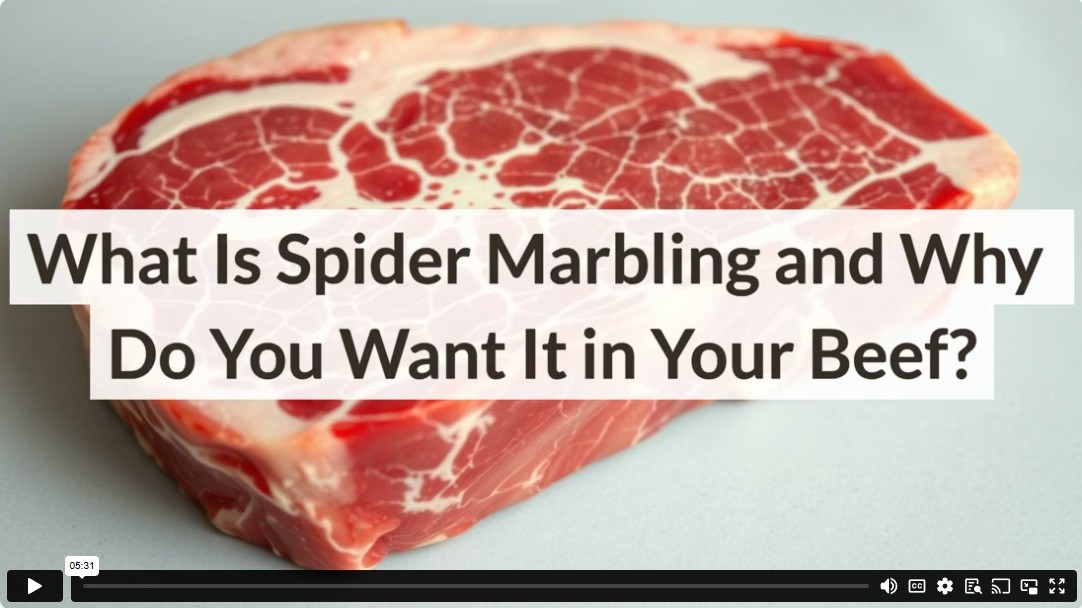
Spider marbling refers to the fine, web-like threads of intramuscular fat that spread through a cut of beef in thin, interconnected patterns. Think of a spider’s web laid over a cross-section of meat. That single visible element can tell you a lot about how the beef was raised and fed, and, importantly, how it might taste.
What Is Intramuscular Fat?
Fat in beef appears in several forms. Three forms are:
- Subcutaneous fat: The fat formed on the outside of the cut. This fat develops under the skin and is typically trimmed off at the butchering stage.
- Intermuscular fat: The fat found between muscles. These are the white seams you see separating different muscle groups, and are usually large and distinct.
- Intramuscular fat: The fat deposited within the muscle fibers. This is also known as marbling and is the very last to develop.
The different layers of fat all contribute to the final quality of the beef, but intramuscular fat (marbling) is the most important factor to look for.
Standard marbling looks like white streaks or large, chunky blobs deposited sporadically within the meat. Cattle finished on grain develop this kind of intramuscular fat.
Spider marbling is different. It’s still fat deposited within the muscle, but it makes a recognizable pattern. Instead of those large pockets of fat, spider marbling spreads outward in fine threads that weave evenly through the surrounding muscle fibers. The result is a thin web of fat running throughout the entire muscle.
How Does Spider Marbling Affect Flavor and Texture?
The distribution of fat is important. Fine, evenly spread fat reaches more of the meat than chunky, isolated pockets or streaks do.
That fat carries flavor. More specifically, it carries the fat-soluble compounds that give Dexter beef steaks much of their rich depth and tenderness.
The even webbing that comes from spider marbling means that those threads of fat melt into the surrounding muscle fibers. This is sometimes described as a self-basting effect. The fat isn’t just sitting on top of the meat. It’s woven through it, releasing as the temperature rises and working into the cut from the inside out.
The result yields a flavor that feels like it is part of the meat, rather than layered on top. It creates a texture that feels consistent, rather than alternating between lean and fatty bites.
Where Does Marbling Come From?
Marbling doesn’t happen overnight; it develops over years. A combination of genetics, diet, movement, and maturity all play a part. This is why not all marbled beef tastes the same, even when two cuts look similar in the case.
Heavily grain-finished beef can develop thick, visible marbling quickly. A high-calorie grain diet accelerates fat deposition in the final months of the animal’s life. The rapidly developed fat doesn’t have time to distribute much throughout the muscle fibers.
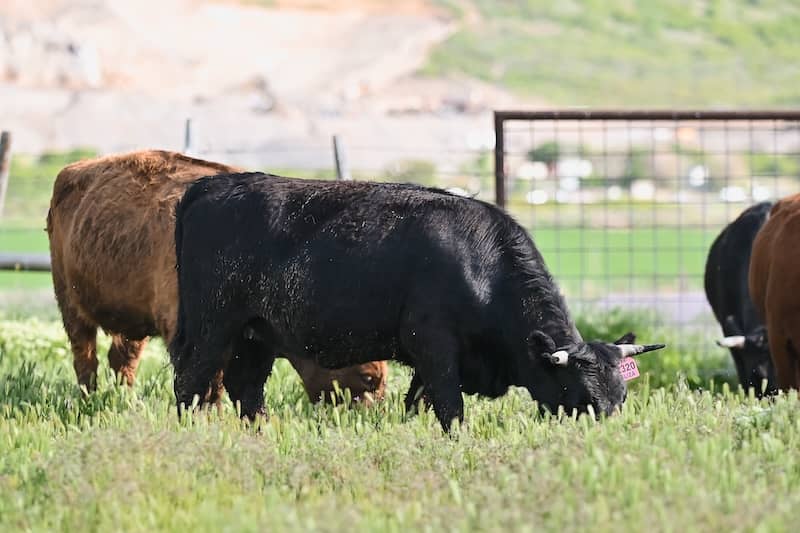
An animal that matures at its own pace, grazes on varied pasture, and builds muscle through real movement develops fat differently. The fat integrates more slowly into the muscle structure and tends to be finer and more evenly distributed.
Marbling is the last fat the animal deposits, and it needs time to spread evenly throughout the muscle. Grain-finishing prioritizes weight over age and harvests early in that process, but spider marbling benefits from patience.
Why Do Heritage Cattle Breeds Matter?
Heritage cattle breeds developed over generations for pasture life, not for rapid weight gain in a feedlot. They’re typically smaller-framed, slower to mature, and better adapted to grass-based diets. Those traits directly affect where and how fat develops in the animal.
Dexter cattle are a good example. This heritage breed is one of the oldest native cattle breeds in the British Isles, originating from Ireland. Their genetics make them ideal for developing slow intramuscular fat accumulation within their smaller, more tightly grained muscle fibers.
Slow maturity means the animal has more time to build that fat gradually through grazing rather than rapidly through grain. The flavor profile can reflect that, too. Many people describe well-raised Dexter cattle beef as more complex than commodity beef, with a richness that feels built into the cut.
What Should You Look For?
When you’re evaluating a cut of beef and looking for spider marbling, here’s what to pay attention to:
- Fine, distributed streaks: Look for thin white or off-white threads that spread throughout the red muscle tissue. Avoid large isolated pockets of fat or fat only along the edges of a cut.
- Deep, consistent color: Well-raised, properly aged beef tends to have a rich, dark red color. Pale or grayish meat may indicate faster processing or poor aging conditions.
- A clear source: Marbling starts on the farm. Knowing the breed, diet, and farming practices behind the beef gives you more context for what you’re actually buying.
Spider Marbling Makes a Difference
You can’t fake good marbling; it’s a visible record of a slower, more deliberate process that pays off in flavor. Heritage breeds like the Dexter provide the right conditions for high-quality intramuscular spider marbling to form. There are still many variables that affect the final result, such as cooking temperature, resting time, and cut thickness, but marbling builds a foundation for everything else to build on. It is an important element developed long before the pan is ever heated.
Video