
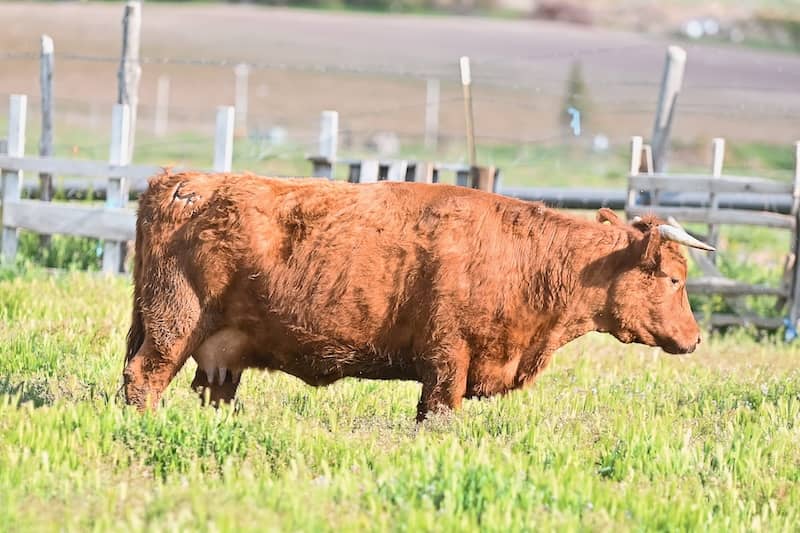
A great steak starts long before it hits your plate. It’s not just the right seasonings and temperatures; it’s also how a cow is raised, handled, and treated throughout its life.
Cattle experience stress just like other animals, and that stress can change their bodies in ways that affect the beef they produce. Tenderness, color, flavor, and even shelf life can all be influenced.
Scientists have studied this connection for decades. Their research shows that calm, low-stress handling is an important way farmers can protect the quality of farm-to-table beef from the pasture to your plate.1
How Stress Changes Beef Quality
A calm cow and a stressed cow might look the same on the outside, but inside the muscles, very different things are happening.
When cattle are stressed, their bodies release the stress hormones cortisol and adrenaline. These heightened levels trigger the release of stored energy, including muscle glycogen.
Glycogen is a form of glucose (sugar) stored in the body that provides energy. It also plays a big role in the quality of meat after harvest. Once harvested, the muscle’s stored glycogen converts to lactic acid through a process called post-mortem glycolysis.
This lactic acid lowers the muscle’s pH, helping give the meat its bright color and tender texture while inhibiting spoilage.1 If the pH stays too high, it can cause a problem called dark-cutting beef, or DFD (dark, firm, and dry).
As the name implies, DFD beef is darker, less tender, and has a shorter shelf life than properly acidified beef.1 These changes occur at the molecular level and can’t be corrected later. Ultimately, lower stress tends to result in higher glycogen levels, which can lead to biologically better meat.
How Calm Handling Reduces Stress
To take good care of cattle, it helps to understand how they respond to their surroundings.
Cattle are prey animals with an instinct to notice unfamiliar sights and sounds. They’re naturally cautious and can easily become frightened.2 Things like loud noises, sudden movements, and disruptions to their routine can all cause stress. Cattle that are treated calmly become easier to handle, while cattle that are treated roughly can become fearful and more difficult.
Low-stress handling focuses on preventing panic. Once cattle become highly stressed, it can take 20-30 minutes for their heart rate to return to normal. To avoid unnecessary stress, some farms:
- Walk cattle instead of making them run
- Move them using calm positioning rather than force
- Avoid unnecessary noise and confusion
- Keep familiar groups together when possible
Good handling can keep cattle calmer. Calmer cows experience less stress, are easier to manage, and are more likely to produce high-quality beef.2
How Consistent Care Improves Beef Quality
Good animal care is about more than handling; it’s also about how often the animal’s life is disrupted. When stressful events happen repeatedly, they can affect the animal’s overall well-being and deplete glycogen reserves.
Small choices can make a big difference. Research has found that cattle agitated during routine handling had significantly lower weight gains, tougher meat, and a higher chance of dark-cutting beef.1
On many conventional beef farms, cattle may move through several facilities from weaning to harvest. Each transition can carry a new environment and additional stress.
This factor is one reason some farms choose to raise cattle on the same land from birth to harvest. Fewer moves, familiar handlers, and a stable herd help reduce unnecessary disruptions throughout the animal’s life.
How Regenerative Farming Supports Calm Cattle
Regenerative, grass-fed beef comes from cattle raised exclusively in naturally grown pasture. The cattle can move and graze freely and live in stable herds on familiar land. This environment provides the consistent routine and familiar surroundings that help make cattle calmer and easier to manage.
Regenerative farming practices emphasize soil and land health. These farms tend to have smaller herds and rotational grazing on diverse, seasonal pastures. No synthetic fertilizers are used, and the cows stay on the same land their entire life.
Both regenerative farming and grass-feeding work with the natural behavior of the cattle and the land rather than against it. These methods can fit well with the same low-stress handling principles that help protect beef quality.
How Harvest Can Protect Beef Quality
Even the best animal care can be affected by what happens on harvest day. The final hours before harvest can be one final opportunity to protect beef quality. Cattle that experience unnecessary stress can deplete the muscle glycogen needed to produce tender, flavorful beef.
Temple Grandin, a professor of animal science at Colorado State University and one of the most influential researchers in livestock handling, has spent decades studying how cattle respond to processing facilities. Her research has shown that simple changes, such as reducing loud noises and bright lights and training handlers to move cattle calmly, can reduce stress during handling and processing.2
For pasture-based operations that take animal husbandry seriously at every step, the transition to harvest is another opportunity to preserve or diminish what the farm has built. Animals with a history of calm, consistent handling load and travel more quietly, and arrive at the processing facility in better condition than those without that background.
Better Beef Starts Early
A good piece of beef is often shaped by much more than genetics. Science has found that the way cattle are treated throughout their lives can play a big role.
Stress changes the muscle chemistry, and muscle chemistry directly affects the overall quality of the meat. From daily handling and consistent routines to thoughtful transportation and careful harvesting, every stage can affect the final product.
Better farm-to-table beef doesn’t begin in the butcher shop. It begins months or even years earlier, with thoughtful animal care. When farmers reduce unnecessary stress throughout a cow’s life, they can not only improve the animal’s quality of life but also the beef that ends up on your plate.
Video
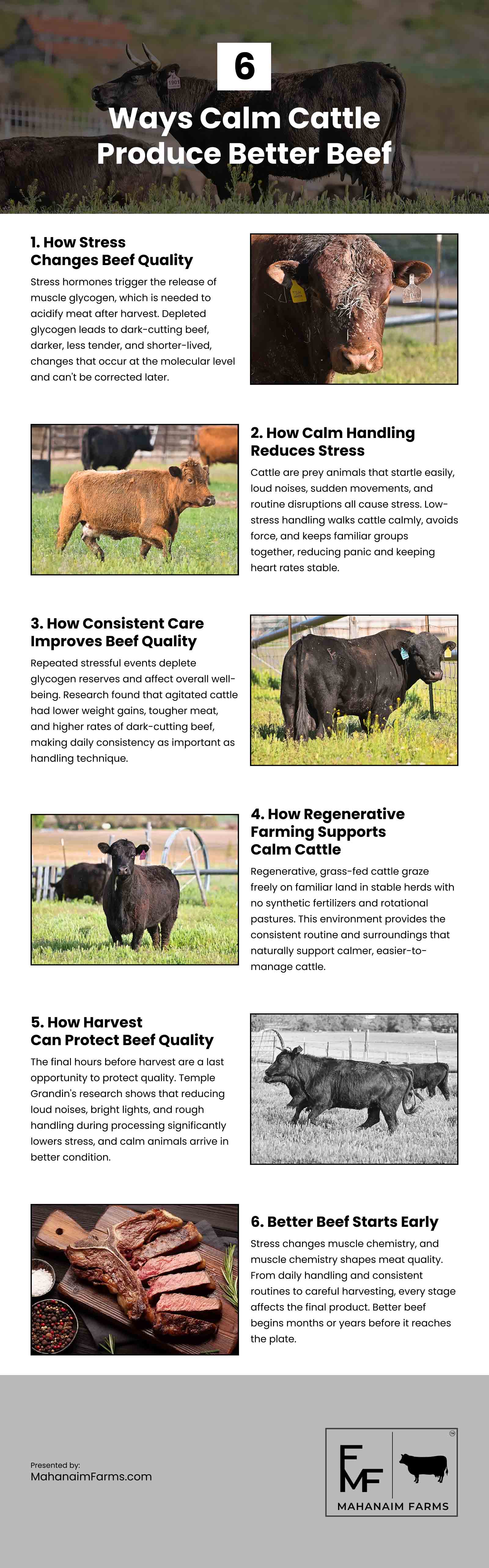
Infographic
The quality of beef is shaped long before it reaches a plate, and stress changes muscle chemistry in ways that directly affect tenderness, color, and shelf life. Discover ways calm cattle produce better beef in this infographic.
1https://pubmed.ncbi.nlm.nih.gov/22063165/
2https://www.grandin.com/meat/cattle/cattle.meat.html