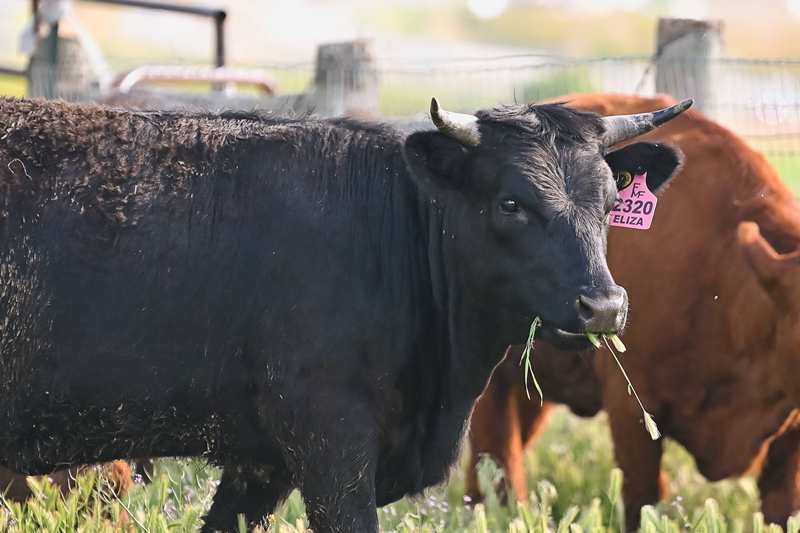
Grass-fed beef can make an exceptionally flavorful burger, especially when it comes from a farm you know and trust. But grass-fed beef is often leaner, and doesn’t always cook the same way as conventional grain-fed beef.
Some cooks have written off grass-fed hamburgers after ending up with dry, overdone patties. But a few simple adjustments to how you handle, season, and cook the meat can make all the difference.
First, Start With the Right Ground Beef
Fat is an important part of a delicious grass-fed beef burger. Without enough of it, the patty can dry out before it’s cooked through.
For the best results, look for ground beef that’s 80% lean and 20% fat. That ratio gives the patty enough fat to stay juicy and flavorful on the grill.
Grass-fed, grass-finished beef can have a distinctive taste shaped by factors such as breed, diet, and maturity. Additionally, dry-aging can boost flavor but reduce moisture, so having enough fat becomes even more important.
If you’re using frozen ground beef, thaw it in the refrigerator rather than on the counter. If you buy ground beef in bulk, portion it into burger-sized packages before freezing so you can thaw only what you need. This makes it easier to preserve beef quality without repeatedly freezing and thawing the same package.
Second, Handle It Gently
The more you work ground beef, the more tightly packed it becomes. That can leave you with a dense, chewy burger instead of a tender one. Aim for a loosely formed patty that holds together without being compressed.
When you’re shaping your burger patties:
- Divide and press gently. Split cold ground beef into even portions and lightly shape each portion with your hands. You’re shaping the meat, not squeezing it.
- Form wider than the bun. Patties shrink as they cook. Starting a little wider helps the finished burger fill the bun.
- Press in a dimple. Use your thumb to make a small indent in the center of each patty. This helps keep the middle from puffing up, so the burger cooks more evenly.
Third, Season the Outside, Not the Mix
Avoid mixing salt and other seasonings into the meat. Salt can affect how the proteins bind together, giving the burger a firmer, springier texture. Mixing seasonings throughout the meat also means more handling, which can make the patty dense.
Instead, form the patties first and then season the outside. Grass-fed beef from heritage cattle already brings plenty of flavor, so simple seasonings like salt and pepper can let those natural flavors shine. Onion powder and smoked paprika can add another layer of flavor without overpowering it.
If you’re cooking burgers in a skillet, add a little butter or garlic to the pan. It’s an easy way to add richness without adding more seasoning to the meat itself.
Wait to add seasonings to both sides of the patties until right before you cook them. Salt can draw moisture to the surface fairly quickly, so adding it too early will dry out your burger.
Fourth, Control the Heat and Watch the Temperature
It can be easy to overcook grass-fed beef on high heat. Use medium heat so the outside has time to brown while the inside cooks through.
Use an instant-read thermometer rather than relying on color to tell when your burger is done. Grass-fed beef is typically darker than grain-finished beef when raw, so usual visual cues are less reliable. Insert the thermometer into the thickest part of your burger, and make sure it reaches at least 160 degrees Fahrenheit.
Once the patties are on the grill or in the pan, leave them alone as much as possible. Pressing down on a cooking burger can squeeze out some of its juices.
If you’re cooking indoors, cast iron works especially well for burgers. It holds heat well and gives the burger a good sear. Preheat the pan over medium heat before adding the patties, and keep it on medium as you cook.
Once the burgers reach 160 degrees, remove them from the heat and let them rest for a few minutes before serving. This lets the juices settle back into the meat. If you cut into a burger right off the heat, most of that moisture ends up on the plate.
Fifth, Keep the Toppings Simple
A well-made grass-fed burger doesn’t need much help. Once you’ve handled it gently, seasoned it simply, and cooked it carefully, choose toppings that complement rather than cover up the beef’s flavor.
Start with a toasted bun for a little crunch. Sharp cheddar, caramelized onions, crisp lettuce, or a simple sauce can add contrast without overwhelming the patty. You don’t need to pile on toppings to make a good burger memorable.
Dry-aged grass-fed beef has plenty of flavor on its own, so you don’t need to do much to make a great burger. With a little attention to how you handle and cook the meat, you can let the good beef be the star.
Video
Infographic
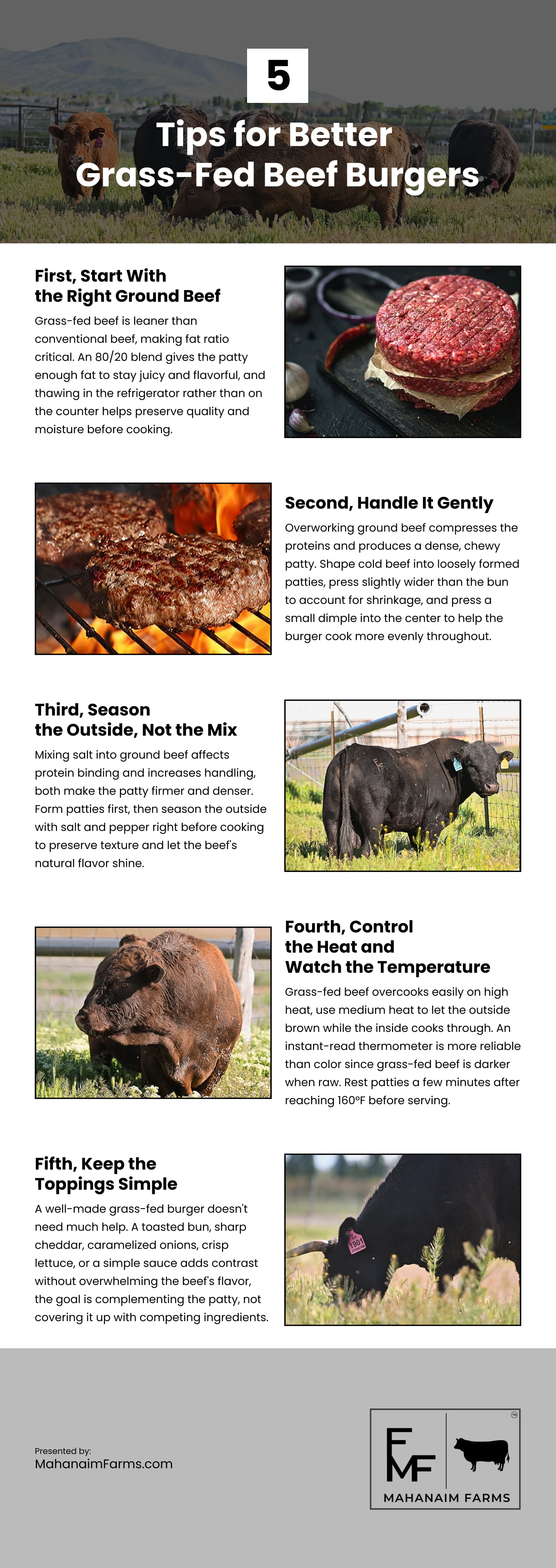
Grass-fed beef makes an exceptionally flavorful burger, but because it’s leaner than conventional beef, a few small adjustments can make the difference between juicy and dry. Check out these tips for better grass-fed beef burgers in the infographic.