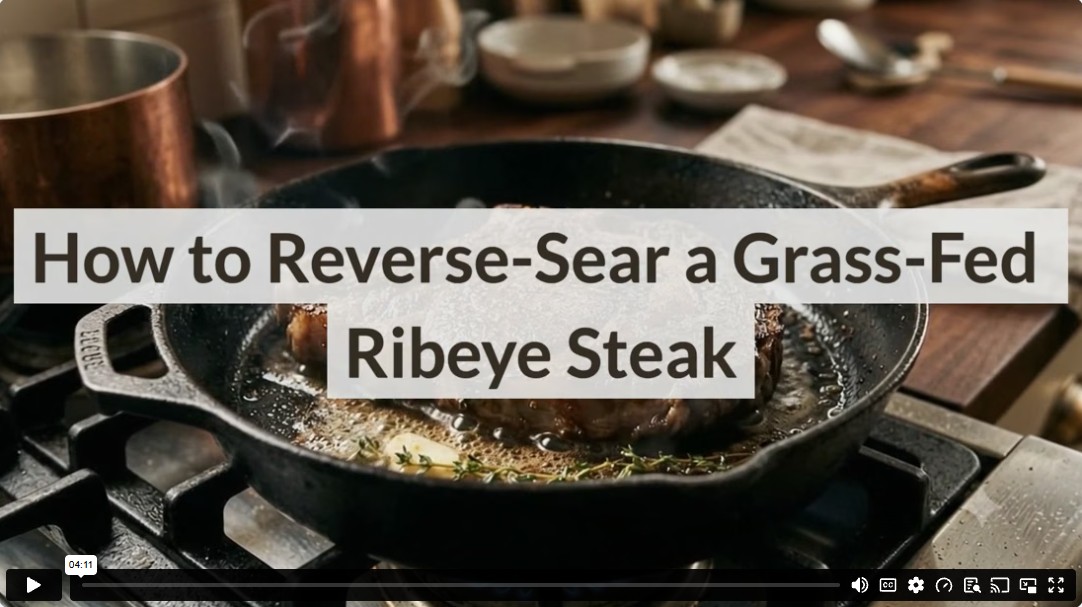
The classic way to cook a steak is to sear it first and finish it in the oven. A reverse sear flips that process. The steak starts in a low oven and ends with a short, hot sear.
For a thick, bone-in, grass-fed ribeye steak, that extra control can make a big difference.
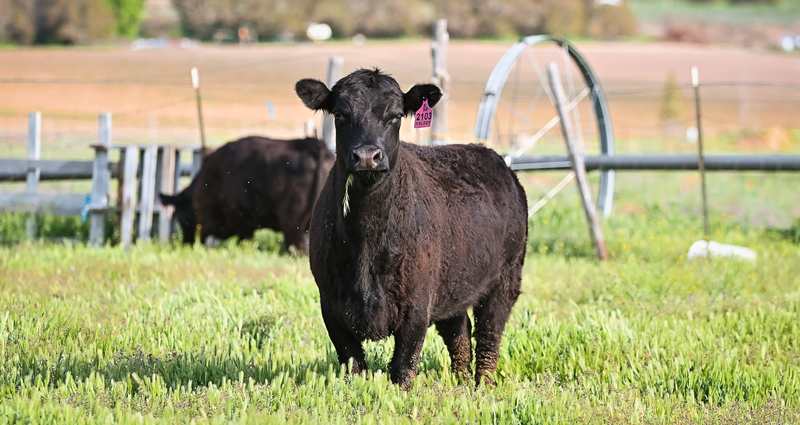
Grass-fed beef is often leaner than conventional grain-fed beef, making careful temperature control especially important. Heritage Dexter cattle also develop fine “spider marbling,” with thin streaks of fat running through the muscle. The reverse sear method lets the steak cook gently and evenly before you build the crust with a final, high-heat sear.
Prepare the Steak
The reverse sear works best with a thick cut. Look for a bone-in ribeye that’s at least 1 1/2 inches thick. Thin steaks cook too quickly to get as much benefit from the low oven.
Start by patting the steak dry with a paper towel. A dry surface makes it easier to develop a browned crust later.
Season all sides evenly with salt and pepper, including the edges.
For an even better crust, place the seasoned steak on a wire rack over a rimmed baking sheet and refrigerate it uncovered for several hours or overnight. This gives the salt time to season the meat while the refrigerator dries the surface.
If you’re cooking the steak right away, you can move directly to the oven.
Start With a Low Oven
Preheat the oven to 250 degrees Fahrenheit with the rack in the middle position. Leave the steak on the wire rack and baking sheet and let it come to room temperature while the oven warms.
You’ll want to use a thermometer instead of relying on time or color. If you have a probe thermometer, you can leave it in the meat during cooking. Position it in the thickest part of the steak, away from the bone. The bone runs cooler than the surrounding meat, so you won’t get an accurate read if the thermometer’s too close to it.
When the oven’s ready, place the steak on the wire rack and baking sheet in the oven.
Let the steak cook slowly and leave it alone. There isn’t an exact amount of cooking time because it depends on the steak’s thickness and starting temperature. You want it to reach 115 degrees Fahrenheit.
That gives you enough room for the steak to finish cooking during the sear without pushing the center too far past your target temperature.
When the steak reaches 115 degrees Fahrenheit, pull it from the oven and let it rest uncovered for a few minutes. This lets the surface dry out a little more, which will help it sear faster and produce a better crust. The internal temperature should continue to rise as it sits.
Finish With a Hot Sear
While the steak rests, heat a cast-iron skillet on high heat. Add a small amount of a high-smoke-point oil, such as avocado or grapeseed, to the pan. When the oil is shimmering, add the steak.
Sear the steak for about 60 to 90 seconds per side, or until a deep brown crust forms. Press gently if needed to keep the steak’s surface flat against the pan, since the bone can lift part of the meat away from the heat.
Don’t forget the edges. Use tongs to hold the steak upright, then press each edge against the hot pan until the exposed fat is browned.
To add a little extra richness, add a pat of butter to the pan at the end of the sear. Tilt the pan and spoon the melted butter over the steak.
Check the internal temperature again before removing the steak from the pan. For a medium-rare steak, the internal temperature should be about 130–135 degrees Fahrenheit.
Rest Before You Cut
Once the steak reaches its final temperature, remove it from the pan and let it rest for at least three minutes before slicing. This gives the juices time to redistribute throughout the meat.
For a bone-in ribeye, start by cutting along the bone to separate it from the main portion of the meat. Then slice the steak across the grain for tender, easy-to-eat slices.
Why This Method Works for Grass-Fed Beef
The reverse sear is especially useful for thick pasture-raised Dexter beef steaks. You can take your time bringing the leaner steak to temperature, then finish it with enough heat to create the crust without exposing the center to high heat for too long.
The result is a steak with an evenly cooked center and a deeply browned crust, allowing the beef’s natural flavor to take center stage.
Video