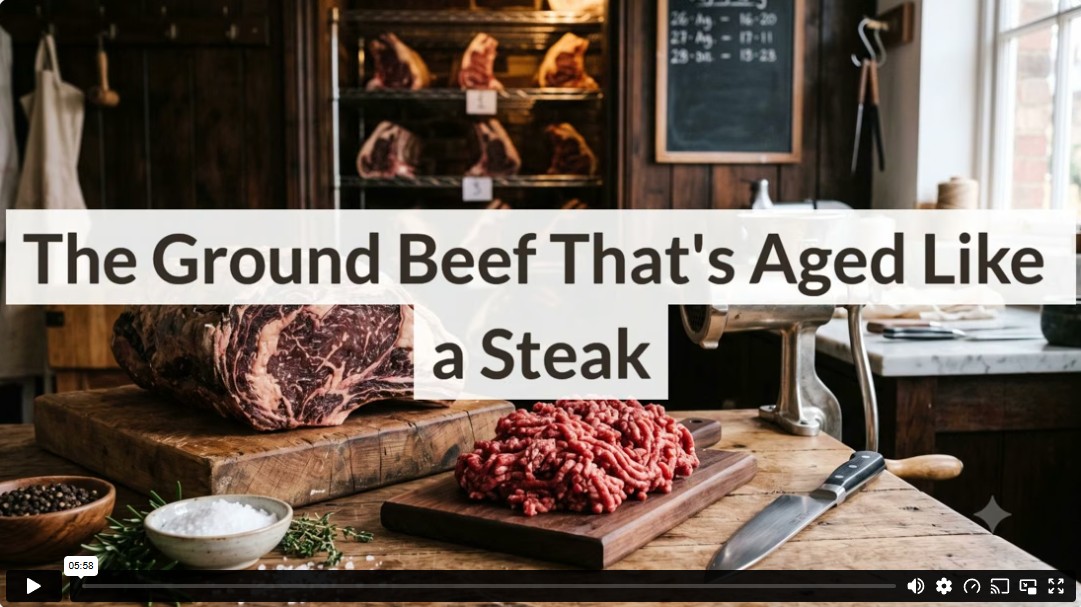
Ground beef is often an afterthought. It’s the middle child in a family of standout cuts like steak and brisket. At most farms, ground beef is made from fresh trim that’s never been aged, just quickly ground and packaged.
But not all ground beef starts the same way. Farms that dry-age the entire steer don’t make any cuts until after the aging process is complete. Once it’s butchered, the trimmings from those dry-aged cuts become ground beef. This can create a richer, more concentrated beef flavor and change how it’s best cooked.
Start With Better Ground Beef
At a typical farm, the steak and roasts are harvested first. They may be sent for dry-aging, but the leftover meat and fat get ground up together and sent to stores for immediate sale.
A less common option is to dry-age the entire steer for at least 14 days under controlled temperature and humidity. No cuts are made until after the dry-aging process is complete. Once cuts are portioned, the trimmings from the dry-aged steer can be used to make ground beef.
Dry-aged beef has a much more concentrated flavor. As moisture leaves the muscle surface, it intensifies the natural beef compounds that remain. Additionally, during the process, enzymes within the muscle tissue break down proteins. This also deepens the flavor while making the meat more tender. By the time those trimmings reach the grinder, they already have the rich, concentrated flavor that dry-aging is known for.
Cook It With Care
Before you reach for the skillet, there are a few things to keep in mind about grass-fed ground beef and heat.
- The fat in grass-fed beef often begins to render at lower cooking temperatures than in heavily marbled grain-finished beef. A cast-iron pan running at high heat can work just fine for conventional ground beef. That same pan can quickly cook off the fat in your grass-fed ground beef, leaving you with tough, bland meat. Use medium to medium-high heat when browning so the fat can render slowly.
- Handle the beef as little as possible. Beef can get overworked if it’s packed too tightly or turned too many times. The finished product can be dense and chewy. It’s especially noticeable in burgers and meatballs. Bring the meat together just enough to hold its shape, then leave it. This way, you preserve the ground beef’s texture.
- Because grass-fed ground beef can cook faster than conventional beef, start checking it a little earlier than you normally would. A meat thermometer removes the guesswork and can help you get the most out of your meal.
Dry-aged ground beef rewards a lighter touch. Medium heat, minimal handling, and simple seasoning let its natural flavor stand out.
Grill a Great Burger
A great burger lets the beef do most of the work. Because dry-aging concentrates the beef’s natural flavor, it doesn’t need heavy seasoning to taste rich. Keep the ingredients simple and let the beef do the rest.
Gently divide the ground beef into 4 to 6-ounce portions, a little bigger than your palm. Shape each patty just enough to hold together, then press a shallow thumbprint in the center. This helps the burger stay flat as it cooks, instead of puffing up in the middle.
Season both sides generously with salt and pepper just before cooking. Skip spice blends or mixing seasonings into the meat. They can overpower the savory, dry-aged flavor.
Cook your burgers over medium-high heat on a clean, oiled grill or in a cast-iron pan. Let the patty sit long enough to form a crust before flipping, usually about three to four minutes per side, depending on thickness. Flip only once, and don’t press down on the patty with a spatula, or you’ll squeeze out the flavorful juices.
Let the burgers rest for a few minutes before serving. This gives the juices time to redistribute, making every bite more tender and tasty.
Simmer a Rich Bolognese
Bolognese is a slow process that amplifies the flavors of the base ingredients. A bolognese that simmers for two to three hours using dry-aged ground beef is different from the same recipe made with conventional ground beef. The flavor compounds developed during aging take center stage, bringing a depth and complexity that surprises many people.
Start by browning the beef in a lightly oiled pan before adding anything else. Let the first side sit undisturbed until a crust forms.
Once the beef is fully cooked, build the soffritto. This combination of finely diced onion, carrot, and celery is cooked down until soft and translucent.
Return the beef to the pan, add about a cup of wine (or broth), and let the alcohol cook off before lowering the heat to a gentle simmer. Keep the heat low enough that the surface barely moves and leave it there for two to three hours. For a traditional bolognese, add whole milk near the end. This can soften the acidity and round out the sauce.
Serve with the widest pasta shape you can find, like pappardelle, tagliatelle, or rigatoni. Thinner, more delicate pasta doesn’t have a large enough surface area to catch your carefully crafted bolognese sauce.
More Memorable Meals
Meatballs follow many of the same principles. Use simple ingredients, mix gently, and brown them well before finishing in sauce. Those small steps help preserve the rich flavor developed during dry-aging.
Beyond burgers, bolognese, and meatballs, dry-aged ground beef is a great option for dozens of other applications, like:
- Stuffed peppers
- Cottage pie
- Meat sauce
- Tacos
- Meatloaf
Whether you’re making a quick weeknight dinner or cooking for a crowd, this ground beef brings steakhouse flavor to one of the most versatile ingredients in your kitchen.
A Better Beginning
Ground beef may not get the same attention as steaks and roasts, but that doesn’t mean it should be treated like an afterthought. When the whole steer is dry-aged before it’s butchered, the ground beef carries the same care and flavor as every other cut.
The best way to enjoy it is to keep things simple. Cook with moderate heat, handle the meat gently, and let the rich, dry-aged flavor do the work. From burgers to bolognese, start with quality ingredients, cook with care, and let the beef speak for itself.
Video