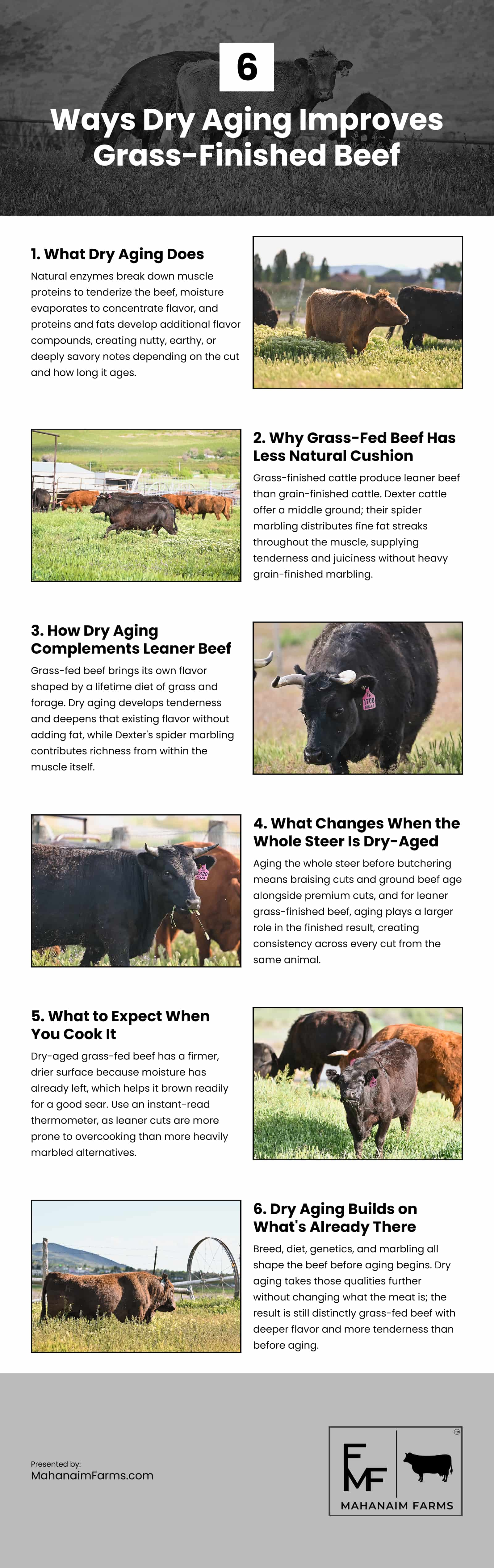
Dry aging has a reputation for turning great beef into something exceptional. It deepens tenderness and flavor without erasing what makes the beef distinctive. That’s especially true for the leaner grass-finished beef.
With less intramuscular fat to contribute richness and juiciness, leaner beef depends more heavily on the meat itself for taste and texture. Dry aging gives the beef time to soften and develop more complex flavors before it ever reaches the pan.
So what changes during the aging period? And why do those changes work especially well with leaner beef?
What Dry Aging Does
Dry aging keeps beef in a refrigerated space with carefully controlled temperature, humidity, and airflow. It sparks a series of changes that happen naturally without anything added to the beef.
Natural enzymes slowly break down muscle proteins, which helps tenderize the meat. Moisture also leaves the meat as it ages. With less water present, the flavors already in the beef become more concentrated.
There’s more happening than evaporation alone. Proteins and fats also change during the aging process, creating additional flavor compounds. Depending on the cut and how long it ages, dry-aged beef can develop nutty, earthy, roasted, or deeply savory notes.
Why Grass-Fed Beef Has Less Natural Cushion
Cattle fed entirely on grass and forage tend to produce leaner beef than cattle finished on a high-energy grain diet. Grain finishing can increase intramuscular fat and external fat on the animal.
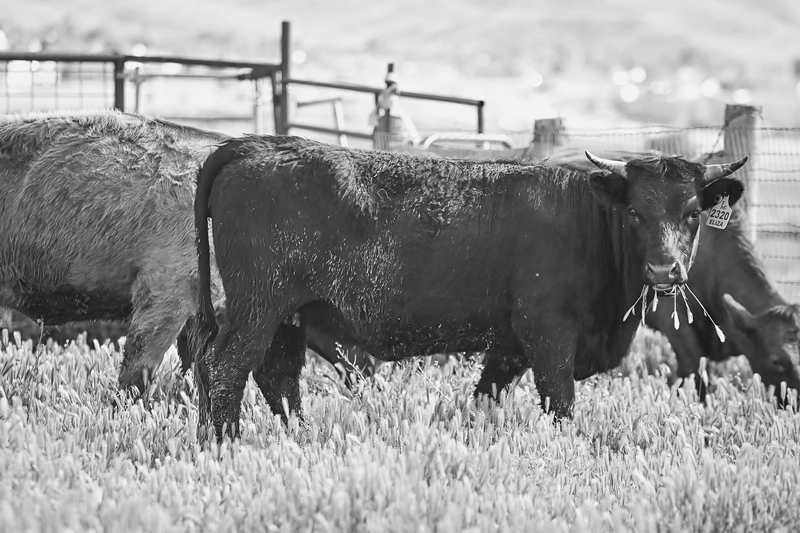
Dexter cattle offer an interesting middle ground. They’re a smaller, slower-maturing heritage breed that can develop fine marbling without the grain-finishing period common in conventional beef production.
These cattle are known for their distinct spider marbling, or fine streaks of fat distributed throughout the muscle. Marbling adds tenderness and juiciness, giving heavily marbled beef a built-in cushion as it cooks.
With less fat dominating each bite, the flavor shaped by a lifetime diet of grass and forage has more room to come through.
How Dry Aging Complements Leaner Beef
Grass-fed beef already brings its own flavor to the aging process. A lifetime diet of grass and forage helps shape the beef’s flavor, while Dexter’s spider marbling contributes richness.
Dry aging complements those qualities without adding more fat. It develops tenderness and deepens the beef’s already present flavor.
For Dexter beef, spider marbling and dry aging play different but complementary roles. The marbling comes from the animal itself. Dry aging develops the flavor in meat after processing.
What Changes When the Whole Steer Is Dry-Aged
Dry aging is often reserved for premium cuts like ribeyes and strip steaks. When the whole steer ages before butchering, the beef destined for braising cuts and ground beef goes through the same aging period.
That can be especially useful with grass-finished beef. Leaner cuts have less intramuscular fat to provide richness and tenderness, so the changes that happen during dry aging can play a larger role in the finished beef.
Whole-steer aging also creates consistency. Even though the cuts don’t taste or cook the same, they all begin with beef that’s gone through the same aging process.
What to Expect When You Cook It
Dry-aged grass-fed beef may feel a little firmer and drier on the surface than wet-aged beef. That’s because some moisture has already left the meat before it reaches your kitchen.
That moisture loss can be a big help when it’s time to sear. A dry surface browns more readily, so a steak can develop a good crust without spending unnecessary time over high heat.
Grass-fed beef needs careful temperature control because leaner cuts are more prone to overcooking. Thickness, marbling, starting temperature, and cooking method can all affect cook times, so use an instant-read thermometer. This is more reliable than judging doneness by time or appearance alone.
Dry Aging Builds on What’s Already There
Good dry-aged grass-fed beef starts with good beef.
Breed, diet, age, genetics, and marbling all shape the beef before it enters the aging room. That’s what makes the process such a good fit for grass-finished Dexter beef. The beef can stay relatively lean while fine spider marbling supplies richness through the muscle.
Dry aging takes those qualities another step without trying to turn the meat into something it’s not. The result is still distinctly grass-fed beef with deeper flavor and more tenderness.
Video
Infographic