
Most people buying beef aren’t getting what they think they are. You’ve seen the grocery store packages advertising “grass-fed beef.” Based on that label alone, it sounds like the best, most responsible option.
That label is technically accurate, but it’s not the whole story
Understanding the terms on beef packaging can help you make a better, more flavorful, and nutritious choice.
What “Grass-Fed” Really Means on a Label
In the beef world, the term grass-fed seems straightforward. How could it mean anything other than the cow ate grass? But there is a lot more going on behind the scenes when it comes to U.S. food labeling rules.
Under current regulations, the USDA allows producers to label beef “grass-fed” if cattle ate grass at any point during their lives. Even if they were transitioned to a grain-based diet months before slaughter, as long as they were in the pasture at some point, they qualify for the label. Most beef labeled “grass-fed” falls into this category.
When you see “grass-fed” on a package, it tells you where the cow started, but not where it finished.
What “Grass-Finished” Actually Means
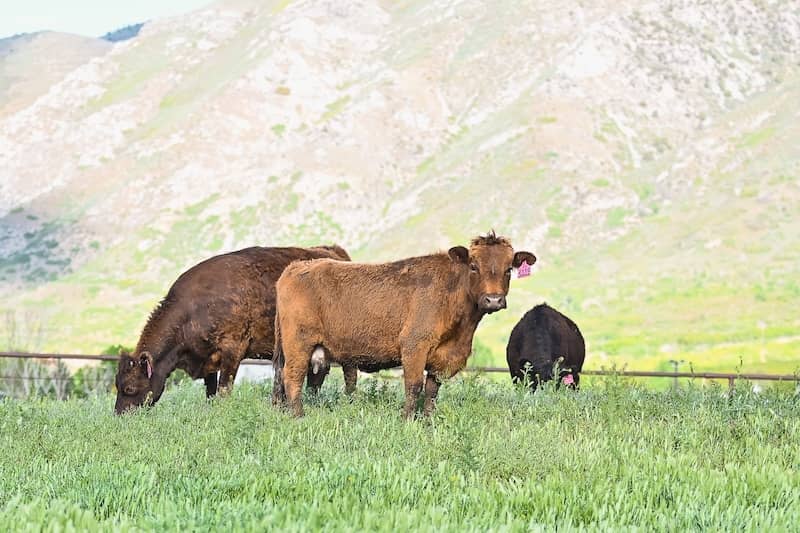
Grass-finished means the animal ate only grass and forage from birth through its final days before harvest. There was no grain-finishing period. No feedlot transition. The animal lived on pasture for its entire life.
This distinction is a stricter standard, and it is what most people picture when they think of pasture-raised beef.
What an animal eats in the final months before harvest directly affects its fat development, flavor, and overall eating quality. Grain-finishing accelerates fat gain and produces a less flavorful, more fatty taste. Grass-finishing produces a leaner animal with a richer, more distinct flavor that reflects the pasture it grazed.
Look for a label that says “100% grass-fed and grass-finished.” It closes the loophole and tells you the cow ate grass from start to finish.
How the Finishing Period Changes the Beef
The finishing period is the final phase of the cow’s life before harvest. For conventional beef, that means weeks in a crowded feedlot and a diet heavy with corn and soy. These grains cause rapid weight gain and alter the composition of fat.
Grass-finished cattle develop fat differently. Because they continue grazing on pasture, the finishing process is slower and more gradual. The animal’s fat builds naturally, reflecting its forage, similar to how wine reflects its region.
The flavor is directly affected by what the cows eat. Beef finished on a bland diet of grain can’t compare to the more complex, richer flavor of grass-fed and grass-finished beef.
How to Read a Beef Label More Carefully
Most beef labels aren’t trying to deceive you, but they aren’t required to tell you the whole story either. Here are a few phrases worth knowing:
- “Grass-fed” alone: The animal ate grass at some point. It may have been grain-finished.
- “100% grass-fed”: Usually a stronger signal that the animal was fully grass-fed, but it’s still worth verifying with the producer.
- “Grass-fed and grass-finished”: The clearest language. The animal ate only grass and forage throughout its life.
- “Pasture-raised”: Refers to how the animal was housed for some portion of its life,, not necessarily what it ate. An animal can be pasture-raised for some of its life and grain-finished for the rest.
- “Natural”: A USDA label term that means minimally processed with no artificial additives. It says nothing about diet, grazing practices, or finishing method.
When in doubt, buy directly from a farm that clearly labels and describes its practices. A farm that controls what its cattle eat from conception to harvest won’t hide behind vague labels.
What Single-Farm Sourcing Has to Do With It
Sourcing transparency matters beyond just the label. When you buy beef from a single-farm operation, you can know exactly what the cattle ate, how long they grazed, and how they were finished. There’s no complex supply chain to follow, no aggregated cattle from multiple ranches. It’s one farm, one herd, and one set of practices.
Most grocery stores can’t offer that kind of transparency. The beef typically sold is sourced from multiple producers, blended at a processing facility, and then packaged under a store brand or national label. The label may say “grass-fed,” but the farm of origin may be impossible to identify.
Direct-to-consumer beef from a single-farm source gives a straightforward answer to a simple question: where did this beef come from, and how was it raised?
Why Slow Maturity Makes Grass-Finishing Work
Grass-finished beef done well requires patience. Cattle that finish on grass alone take longer to reach harvest weight than grain-fed cattle. That slower timeline allows cattle to mature slowly and develop a more complex flavor.
The muscle fibers are finer, which produces a preferred finer-grained texture in the finished cut. The animal’s body has had more time to develop and accumulate beneficial omega-3 fats and to distribute them differently.
Heritage breeds like Dexter cattle are well-suited to grass-finishing because they’re naturally smaller-framed and efficient on forage. They don’t need grain to reach a quality finish. Their genetics support a slower, pasture-based maturation, resulting in a distinctive, high-quality taste.
When you combine a heritage breed, 100% grass-fed and grass-finished feeding, slow maturity, and dry aging, you get beef that surpasses anything found in typical grocery stores.
What to Look for When You Buy Grass-Finished Beef
If you’re ready to buy beyond the grocery store label, here’s what to look for in a direct-to-consumer beef source:
- Does the producer use the phrase “100% grass-fed and grass-finished”?
- Do they raise their own cattle, or do they source from multiple farms?
- Can they tell you the breed of cattle and why they chose it?
- Do they control what the cattle eat and where they graze?
- Is there a dry-aging step, and how long does it last?
A producer who can answer those questions directly is worth your attention. Avoid any producer who deflects with vague language about “natural” practices or “premium” sourcing without specifics.
The Label Is Just the Starting Point
“Grass-fed” is a step in the right direction, but it’s not the finish line. It is often used in marketing, but doesn’t tell you much about the beef’s quality, taste, or origin.
Grass-finished is the distinction that matters most. When you know what to look for, you can move past the marketing language and find beef that actually reflects the standards you’re looking for.
If you care about how your beef was raised, what it eats, and what you’re actually putting on your plate and in your body, pay attention to the label. Look for certification. And when in doubt, ask.
Better beef starts with better questions. Start with “grass-fed or grass-finished?” and go from there.