
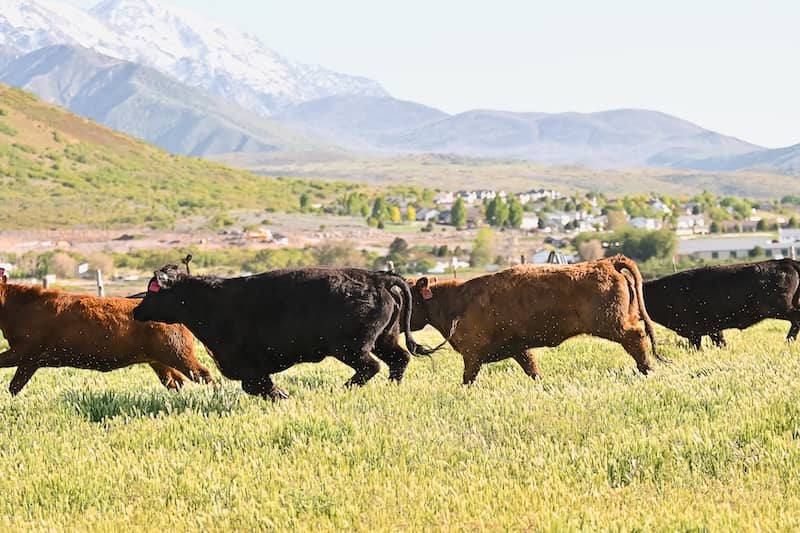
The best place to buy grass-fed beef online isn’t always clear. The digital market has grown rapidly, and finding the answer to what the animal ate and how it was raised is often ambiguous.
The problem is that most beef labels aren’t designed to answer those questions. They’re designed to sell a product. Terms like grass-fed and pasture-raised sound precise, but they can be deceiving. Before you pay a premium, know which distinctions actually make a difference, and which ones are marketing.
Know the Difference Between Grass-Fed and Grass-Finished
Under current US labeling laws, nearly all beef cattle in the country qualify as “grass-fed” at some point in their lives. Calves typically graze on pasture after weaning, and that’s enough to earn the label on many products found at the grocery store and from online retailers.
What that label doesn’t tell you is what the animal ate during the last several months of its life. In conventional beef production, most cattle are moved to feedlots and finished on a grain diet. Grain finishing accelerates weight gain and brings the animal to slaughter weight faster than grass feeding alone.
The trade-off is that grain-finished beef typically has a lower-quality fat composition, flavor profile, and nutritional makeup. The difference between “fed” and “finished” is vital, and one you will notice.
The dark color of grass-fed, grass-finished heritage beef is another good indicator to look for. The deep color comes from the mineral-dense forage the cattle graze on throughout their lives. You don’t get this type of color from grain finishing.
When you’re shopping online, look specifically for producers who use both terms and can explain their feeding program. A product labeled “grass-fed” without “grass-finished” most likely involved grain at some point in the process.
Look for Farm Transparency
On average, a conventional beef steer passes through four different farms between weaning and slaughter. A calf may be born on one property, weaned and backgrounded on a second, moved to a third for stocker grazing, and sent to a feedlot for finishing before reaching a processing facility. Each transition introduces new variables in diet, environment, and handling that shape the final product in ways no label will mention.
A single-farm operation that’s involved with the full lifecycle of the animal is doing something categorically different. When the same producer breeds, raises, and processes the animal without it ever leaving the property, every element of that animal’s life is accounted for: what it grazed on, what the soil contained, how it was managed from birth forward.
It can be difficult to find a farm with this kind of transparency. Before ordering from any online beef retailer, learn whether the animal was born and raised on one farm and whether it ever changed hands. A producer who can answer that clearly is telling you something important about how the operation runs and what they value.
Consider How Breed Affects Flavor and Texture
Most online beef retailers sell Angus or Angus crossbreeds because those animals reach slaughter weight quickly and perform well in the conventional grading system. That’s practical for large-scale production, but it doesn’t mean they’re the best option for buyers focused on flavor and nutritional density.
Heritage breeds are older, slower-maturing cattle that existed long before the industrial beef system. Think of them the way you’d think about heirloom tomatoes: these are both products preserved over generations for quality, not for yield or output.
A heritage breed like Dexter cattle takes approximately 30 months to reach full maturity, compared to 16–18 months for conventional cattle. That longer maturation produces finer, smaller muscle fibers, which translates to natural tenderness that doesn’t need mechanical or chemical intervention.
Heritage breeds also tend to develop what’s called spider marbling, an intramuscular fat pattern that forms within the muscle itself rather than as external cap fat. This kind of fat delivers a richer, more tender, and more flavorful experience and develops only through genetics and slow maturation rather than grain feeding.
Producers who raise heritage breeds deliberately prioritize quality over quantity. When you’re shopping online, ask about the breed and why the producer chose it. A clear, specific answer is a good sign.
Ask About Aging
As you consider buying grass fed beef online, pay attention to how it’s aged. There are two main types of aging. The most common is wet aging. This method vacuum-seals and refrigerated cuts of meat in heavy-plastic bags.
Dry-aged beef undergoes a more complicated process in which beef carcasses are held in cold, circulating air for a set period of time. Moisture evaporates, enzymes naturally break down muscle tissue, and the beef’s flavor concentrates. The result is meat that’s more tender and more flavorful than fresh-cut.
Most dry aging in commercial beef production applies only to premium cuts like ribeyes and strip steaks. The rest of the animal, including everything that becomes ground beef, roasts, and braising cuts, is typically processed fresh. That means most “dry-aged” marketing applies to a small fraction of the animal.
A producer who dry-ages the entire carcass before breaking it down is operating at a higher standard. Every cut, including the ground beef, comes from a dry-aged steer. Before you order, learn whether the producer dry-ages the whole steer or only select cuts, and what the minimum aging period is. Look for at least 14 days; any less and the process hasn’t had enough time to work its magic.
The Bottom Line
Buying grass-fed beef online is straightforward once you know what to look for. Single-farm ownership, genuine grass finishing, slow maturation, heritage genetics, and whole-carcass dry aging are the markers that separate a premium product from a premium-priced one. The more of those attributes a producer can confirm, the more confident you can be in what you’re ordering.
Most quality online beef producers are happy to answer direct questions about their operation. A producer who raises a high-end product usually wants buyers to understand what sets it apart. Use the contact form or customer service line before you commit to an order.