
You see the same names on the label. Ribeye. New York strip. Brisket. Short ribs. Chuck roast. Ground beef. But when your first order of Dexter beef arrives, something looks different. The cuts are smaller. The color is deeper. The fat isn’t where you expect it.
Nothing is wrong. You’re just looking at higher quality, better-tasting, and more intentionally raised beef. A superior product that’s instantly recognizable.
Same Name, Different Breed
When butchers break down a Dexter, they follow the same primal map used for any beef cattle. The ribeye still comes from the rib section, and the brisket still comes from the chest. The names are the same because the general anatomy is the same, but that’s where the similarities end.
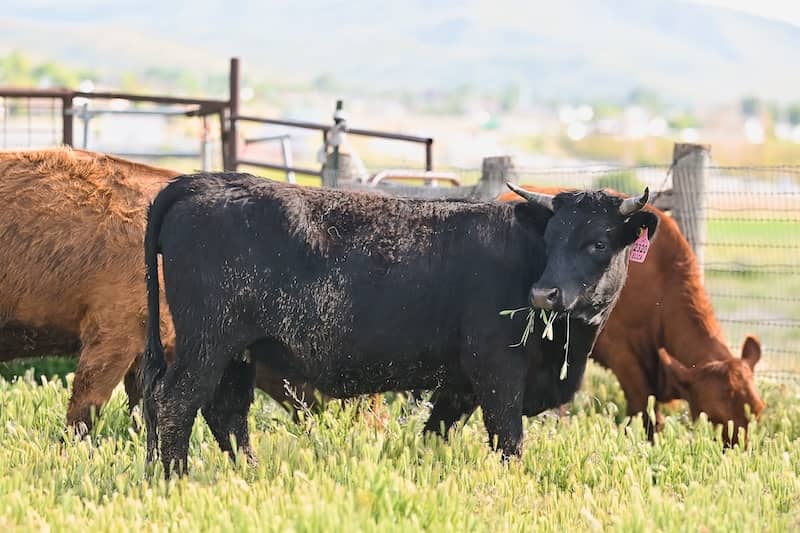
Dexter cattle are a heritage breed and among the smallest in the world. A full-grown Dexter might weigh 600 to 700 pounds at harvest. A commercial Angus steer can push 1,400 pounds or more. That size difference changes everything about how those cuts look, how much fat they carry, and how they cook.
A Dexter ribeye is not a shrunken version of a commodity ribeye. It’s a cut from a unique breed of cattle with fundamentally different muscle development and fat distribution, both of which affect the taste and eating experience.
The Yield Is More Limited
Commercial beef operations are built for volume. They prioritize bulking up their large-frame cows quickly through grain-heavy finishing programs. Their goal is high yield, with little thought to quality or taste.
Dexter cattle, on the other hand, grow slowly on pasture grass. They aren’t penned up and fed grain to force unnatural weight gain. Because of the Dexters’ small stature and the fact that they can grow naturally, each animal produces fewer pounds of finished beef.
The reality of raising a small heritage breed the right way means that those premium cuts like ribeyes, New York strips, and short ribs are available in limited quantities per harvest. When a cut sells out, it’s gone until the next animal is ready.
The Color Might Surprise You
Grocery-store beef is often bright cherry-red. That color usually indicates freshness, but it can also come from the way it was packaged. Many commercial operations process the meat found in grocery stores using high-oxygen modified-atmosphere packaging (MAP) to keep beef looking vivid under store lighting. This preserving method deceptively makes the meat look good while shortening its shelf life.
Dexter beef may arrive darker than you are used to. A deep red or burgundy tone doesn’t mean something is wrong. It often means the beef was aged properly to build flavor and vacuum sealed to preserve freshness. Once you open the package and let the beef breathe, it will often revert to a brighter red within 15 to 30 minutes.
Different Fat, Better Flavor
A USDA Prime ribeye from a commercial operation is bred and fed specifically to produce heavy marbling, which is fat threaded through the muscle in fine lines. That marbling is a direct result of grain finishing and genetics.
Dexter cattle raised on pasture develop fat differently. You may see fat along the outer edges of a cut rather than woven through the muscle. The marbling that does appear tends to be coarser and less uniform than what you find in a grain-finished commercial steak.
That fat carries serious flavor. In fact, pasture-raised fat has a richer, more complex taste, with grassy and buttery notes that grain-fed fat can’t replicate. People who cook Dexter beef for the first time often find the fat’s flavor the most memorable part of the meal.
Brisket and Chuck Are Where Heritage Beef Shines
The low-and-slow cuts are where Dexter beef earns its unbeatable reputation. Brisket, chuck roast, and short ribs benefit from the connective tissue that develops in an animal that lives on pasture and moves around.
Commercial beef often achieves tenderness through controlled feeding and limited movement. Dexter beef builds its tenderness over time. That collagen in the tougher cuts breaks down beautifully with low heat and patience, producing a braise or smoked brisket with depth that mass-produced beef rarely matches.
Ground Beef That Tastes the Way Beef Should
Grocery store ground beef can come from hundreds of animals, blended for consistency and a target fat percentage. The flavor is predictable and mild by design. Ground Dexter beef comes from one animal. That means the flavor reflects what the animal ate, how it was raised, and especially how it was processed.
At Mahanaim Farms, we dry-age the entire steer for a minimum of 14 days, and that depth of flavor carries through to the ground beef. Most operations never dry-age trim. Here, the Dexter’s smaller stature allows aging the entire animal, yielding a depth of flavor that most grocery store ground beef can never capture.
The result is ground beef that is more pronounced, more distinctly beefy, and richer in a way that is hard to describe until you taste it. You will likely use less seasoning because the beef itself is doing more of the work.
Make the same burger you always make, and you will notice the difference immediately.
Don’t Let the Size Fool You
A Dexter ribeye might run 6 to 8 ounces instead of the 14-ounce slab you see at a steakhouse. The cuts are smaller by design. Instead of prioritizing size, Dexter meat prioritizes taste.
The marbling and fat distribution found in pasture-raised Dexters means a concentration of flavor. You may need to adjust your steak-cooking technique. We recommend using high heat and watching your steak’s internal temperature closely. Pull the steak earlier than you think, and give it a proper rest. Salt, high heat, butter, and rest time are all that it takes for a perfectly cooked Dexter steak.
Good Beef Can’t Be Rushed
Dexter beef isn’t a commodity. It is a limited product from a small herd, raised slowly by a farmer who knows the animals and their needs. Each harvest produces a finite amount of beef, and once it is gone, it is gone until the next harvest.
There is no way to speed up that process. The cattle have to grow at their own pace for that classic Dexter flavor and marbling to develop. The pasture has to do its job. The seasons have to turn.
That is why the cuts look, cook, and taste like something you’ve never had before and will never forget.
The names on the label are familiar. Everything behind those names is different. That difference is the whole reason people seek it out.