
Most beef at the grocery store was born and finished in under 18 months. That is not a secret. It’s just how the commercial system works. Mature cattle fast, cut costs, and keep the supply chain moving.
That speed has a trade-off. If you have ever noticed that a steak looked great in the package but was a disappointment at the meal, you have already experienced it.
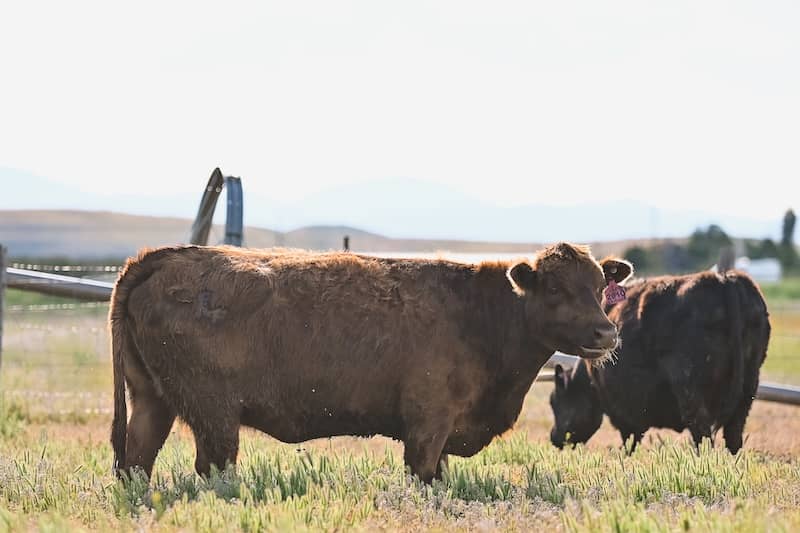
There is another option. Some cattle are raised over a roughly 30-month timeline, nearly twice as long as most commercial operations use. The difference isn’t subtle. Speed, it turns out, is a fast track to bland beef.
Why Harvest Age Matters
Harvest age is one of the biggest ways mainstream beef production has traded quality for efficiency.
Commercial beef operations typically harvest at 14 to 18 months of age. Not because that’s when the cow reaches natural maturity, but because it’s a cost-effective shortcut that leads to more profit.
Grain-based finishing accelerates growth, enabling cattle to reach a sellable size faster than they would if they were grass-fed. The result is beef that hits weight targets but lacks the structural and flavor development that time allows.
A 30-month animal is an entirely different beast. Longer maturity gives the body more time to build muscle, develop intramuscular fat, and accumulate the flavor compounds that define a distinctive eating experience.
Dexter cattle beef is a good example of this. This breed is naturally smaller-framed and slower to mature than larger commercial breeds. That’s not a disadvantage. It’s part of their appeal. Their smaller muscle fibers, fine-grained texture, and superior flavor are a product of that patient development.
How Time Builds Flavor
Flavor in beef comes from specific biological processes that unfold during the animal’s life. It takes time, not luck.
As cattle age, amino acids and other compounds accumulate in the muscle tissue. These are the building blocks of flavor. When you cook a steak, heat triggers chemical reactions between those compounds that produce the deep, complex taste most people associate with great beef. A younger animal simply hasn’t had enough time to build that foundation.
Fat distribution follows the same logic. Intramuscular fat, often called marbling, develops gradually as an animal matures. This is the fat that melts into the meat during cooking, basting it from the inside out. It adds moisture, richness, and a rounded flavor profile that leaner, faster-finished beef cannot replicate.
Spider marbling, the fine web of fat distributed throughout a muscle rather than concentrated in thick seams, is characteristic of well-raised heritage beef. It gives a subtle difference in look, but a significant upgrade in flavor. You see it in the cross-section of a ribeye or a sirloin, and taste it in every bite.
How Time Changes Texture
Beyond flavor, maturity changes the physical structure of the meat.
Younger cattle have denser muscle fibers with more connective tissue that has not had time to soften. The result is beef that can feel tough or require aggressive cooking methods to become tender.
By 30 months, that structure has relaxed. Muscle fibers are finer, and connective tissue has developed in a way that breaks down more easily with proper cooking. The result is a bite that has texture and character without being leathery.
This texture is especially noticeable in 100% grass-fed beef, which naturally carries less of the fat padding that can mask texture issues in grain-finished animals. When grass-fed beef is also slow-matured, the combination creates meat at its finest.
What Patience Costs and What It Returns
Raising cattle to 30 months old costs more than raising them to 18 months old: more months of grazing, more land use, more labor before a single cut reaches a customer.
That cost is significant, but so is the quality it produces.
You aren’t paying for a label when you buy slow-matured beef. You are paying for the time the animal spent developing and for the decision a farmer made to wait and let the beef grow to a better product naturally. No rushing.
The roughly 30-month maturity target is not an afterthought. It is a core part of what produces beef worth buying.
Why It Matters at the Table
Slow-matured, grass-fed beef cooks differently from commodity beef. It holds up better under dry heat. The developed fat and muscle structure gives you more control and more forgiveness. Pull it off the heat at the right moment, let it rest, and you get a steak that stays juicy, cuts cleanly, and delivers layers of flavor from the first bite to the last.
That experience doesn’t happen by accident. It’s the direct result of time, good husbandry, and a commitment to raising cattle the way they were meant to develop.
Quickly matured beef will always be cheaper and easier to find. Slow-matured beef is harder to produce and worth seeking out. When you understand what goes into a 30-month animal grass-fed on regenerative pasture, you’ll be more patient with the process. The payoff is worth it.